New tumble dryer legislation – what it means for you
You may have seen headlines about a "tumble dryer ban". Here's what's actually true:

From 19th January 2027, new tumble dryers sold into Great Britain will have to meet much stricter energy-efficient standards. This means that only heat pump tumble dryers meeting the new minimum energy performance standard will be permitted for sale.

Manufacturers cannot place vented or condenser models on the market (through customs – into the UK) after 18th January.

This does not mean that all dryers will disappear from retailers overnight. Any stock brought into the UK before 19th January will continue to be available to buy until stocks have been depleted.

What’s more, the new regulation does not apply to machines already owned. It also does not affect second-hand sales or repair or servicing of existing appliances. It is a ban on sales of new units going forward, not a ban on what people already have.

What is the minimum energy performance standard?

The new regulations aim to make household tumble dryers more efficient. This means that once the law takes effect, all tumble dryer sales in the UK will have to meet the following requirements:

RequirementsWhat it means
Use new, revised A-G energy labels.This will make it easier to tell which appliances are the most efficient.
Have a maximum Energy Efficiency Index (EEI) of 85.This tells you how much energy is consumed during use.
Eco programmes.The eco setting should be a default cycle or easily accessible.
Use minimal power on standby.Stricter limits mean machines can only use a maximum of 0.50W when in standby mode.
Accessible spare parts.Parts such as drums and motors should be easily obtained for 10 years from product launch.
Minimum 80% condensation efficiency rate.This helps to reduce the risk of damp and mould in homes.


Which tumble dryers are being phased out?

Condenser and vented tumble dryers are being phased out.

Some condenser models may remain on sale, but they must be the most efficient, best-of-the-best models that meet the EEI index of 85 or lower.

If you’re looking to buy one of these models, it is best to do so before 18th January. Browse our range of appliances online or pop into your local store and we can talk you through the options.

Are washer dryers affected?

No. The regulation only covers standalone tumble dryers — washer dryers are specifically excluded.


💡 Value Tip

Worth knowing before you buy: heat pump dryers work best at room temperature, so they're not ideal for an unheated garage or outhouse. If you’re looking to place a dryer in your garage, you'll need a vented model.
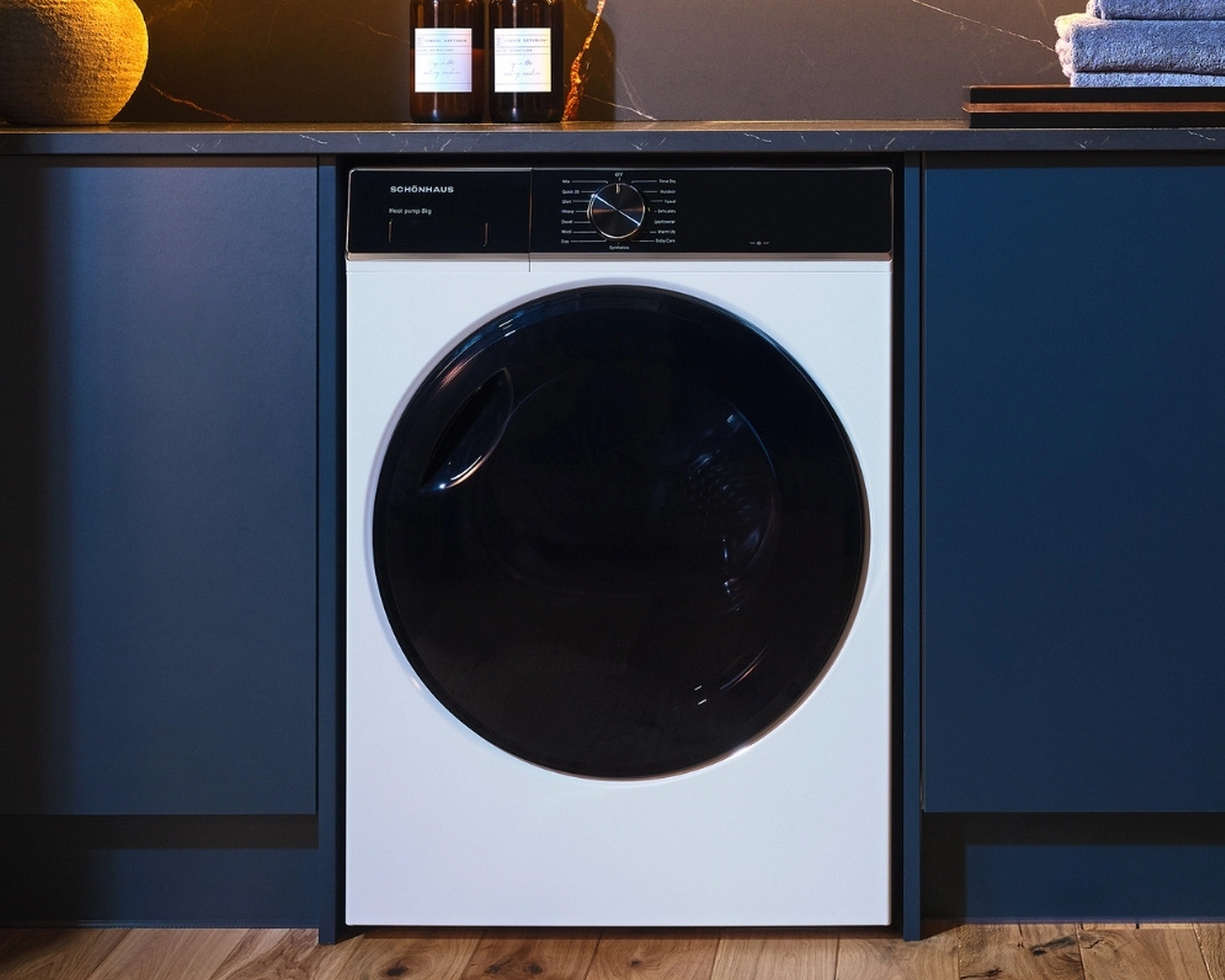


How does a heat pump tumble dryer work?

Instead of blasting your clothes with heat, a heat pump dryer recycles warm air in a loop:

  • Warm, damp air comes off your clothes
  • It passes over a cold coil, pulling moisture out as water
  • The air is gently reheated and sent back into the drum
  • The cycle begins again

This results in lower running costs, gentle drying, and less wear on fabrics.


How much does a heat pump dryer cost to run?

Costs depend on your electricity rate, how damp your clothes are, and how many loads you run each week. On average, a cycle uses between 1.5 and 2 kWh. At the current rate of 24p per kWh, you can expect to pay around 36-48p per cycle.
If you do four loads a week, that’s around £6-8 per month, or £75-100 per year.

Browse our range of appliances online or visit your local store.