Choosing the Best Hob For Your Home
How much do you know about hobs? Unless you’re a kitchen fitter or professional chef, the answer’s probably ‘not a lot’.
And you’re not alone.
That’s because most of us will only need to understand the difference between a gas, electric, ceramic and induction hob if we’re buying one to go with a built-in oven. Or thinking about replacing a hob we already own.
Here we explain how to choose the best hob for your home.
Gas, ceramic or induction hob – what’s your type?
Gas hobs
Gas hobs are popular for good reason: they heat up quickly, are easy to control, and distribute heat evenly across the pan, making them perfect for simmering and frying. Plus, they can be used with all types of pans.
But standard gas hobs are fiddly to clean. An alternative is a gas-on-glass hob (a gas hob on top of ceramic glass), as its smooth surface is quick to wipe down.
Gas hobs must also always be installed by a registered and qualified gas engineer. They can run off mains gas or LPG cylinders, but the gas hob must be designed for your specific gas supply.

Ceramic (electric) hobs
Most hobs – whether electric, gas or induction – are ‘ceramic’ as ceramic refers to their sleek glass cooking surface, not the hob itself. But most retailers use ‘ceramic hob’ to describe a standard electric hob.
Electric ceramic hobs are a sleek, modern addition to kitchens. They’re easy to clean and, like gas hobs, can be used with any pan.
But electric hobs are slower to respond to heat adjustments, and tend to spread heat less evenly across the base of the pan.
A qualified electrician should hardwire in both ceramic and induction hobs (see below).

Induction hobs
Induction hobs use electricity to create an electromagnetic field that delivers instant heat directly to the bottom of the pan.
This makes them safer than other hobs as the hob itself remains (comparatively) cool, reassuring if you have young children around. Additionally, most induction (and electric) hobs feature integrated child-safety locks for added peace of mind.
Induction hobs are also more energy efficient than gas or electric hobs and heat food faster.
The four-zone Blomberg MIN74387NP Induction Hob features 9 handy power levels, sleek touch controls, and Power Boost for extra-speedy heating. It also features Plug & Play and auto safety shut-off.

If space-saving design is your thing, a venting induction hob could be the answer. Venting induction hobs have an extractor fan built into the surface to whisk cooking smells and steam away, so no need for an overhead hood.
However, all induction hobs require iron-based magnetic pans to function correctly. This means you’ll need to invest in a set of induction hob pans if your current cookware isn’t made of cast iron or stainless steel.
Many induction hob pans are marked with a symbol to show they’re compatible. This looks like a series of loops.
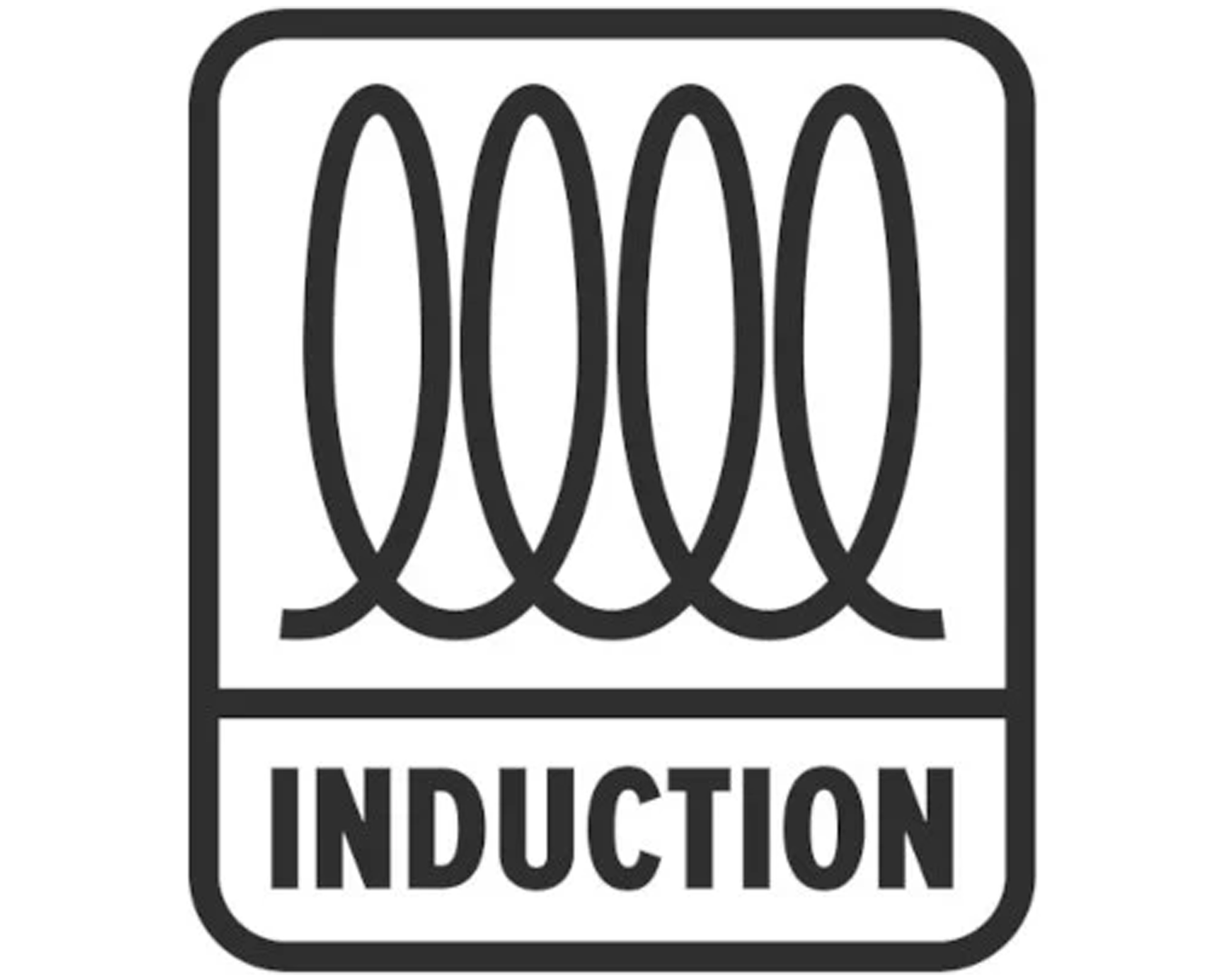
Induction hobs can also interfere with pacemaker settings, due to their electromagnetic field.
What size hob should you buy?
Whichever type of hob you choose, most hobs have four cooking burners or ‘zones’.
However, there’s no shortage of five-zone hobs to choose from – perfect for large families and particularly keen (and confident!) home cooks.
Most hobs have a standard depth of 50 cm and a height of 5 cm. This means both four-zone and five-zone hobs should fit onto standard-sized kitchen counters – the variation is the width of the hob.
Four-zone hobs are typically around 60 cm wide. Those that are slightly wider should still fit a standard worktop gap as they’re designed to overlap the counter.
Five-zone hobs are usually 70-90 cm wide. Five-zone gas hobs sometimes have a high-powered central wok burner for stir-frying or rapid boiling.
Not many people at home? One, two and three-zone hobs are available to suit individual needs.
Explore the full range of AEG, Beko, Blomberg, Bosch and NEFF induction, gas and electric hobs.
3 other things to consider before choosing a hob
1. Energy bills: if your budget allows, consider paying more upfront for an induction hob – like the Blomberg MIN74387NP Induction Hob as this will be cheaper to run over time.
2. Cooking habits: As when choosing an oven, think about the food you eat and how you cook. Match the hob (type, size, speed of heat) to your needs.
3. Installation: remember gas hobs must be installed by a qualified gas engineer – and ceramic (electric) and induction hobs by a qualified electrician.
Whatever you’re looking for, discover the best hob for the job at Euronics. Choose from a wide range online or visit your local store and talk to an expert today.
<< Previous
Choosing the Right Capacity Oven
Next >>
Choosing the Best Oven